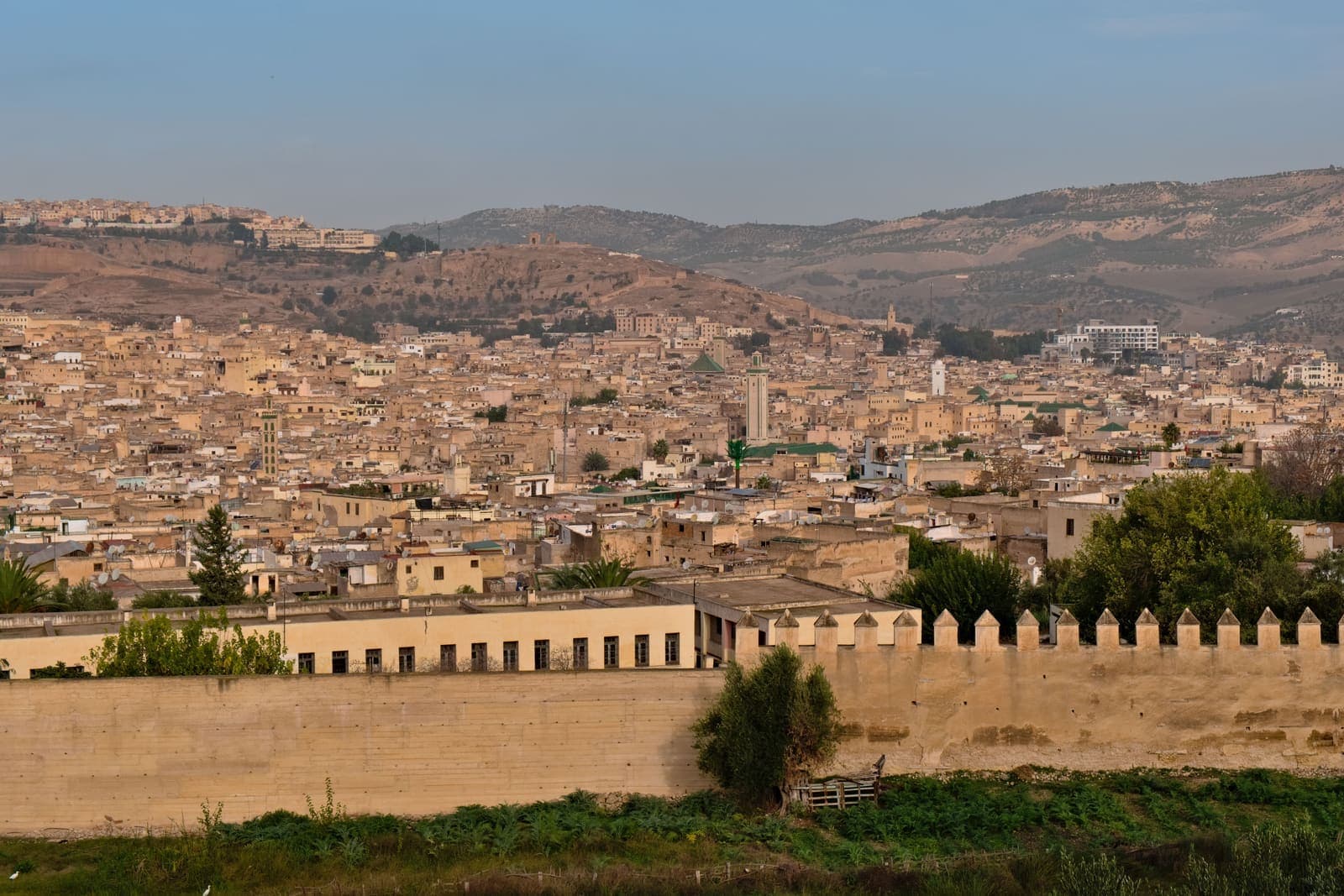
Fes is the oldest of Morocco's imperial cities and, for many travellers, the most fascinating. Founded at the end of the 8th century by the Idrisid dynasty, it was for centuries the country's great religious, intellectual and craft centre. Its medina, Fes el-Bali, is one of the largest car-free urban areas in the world: a tangle of alleys, souks, fountains, mosques and medersas where daily life still follows the rhythms of the past. Donkeys and mules replace cars, and every quarter keeps its own trades.
Visiting Fes takes a little preparation: the medina is huge, signposting is discreet and the first hours can be disorienting. This guide helps you pick your highlights, organise your days and combine Fes with northern Morocco, Chefchaouen, Meknes or the Middle Atlas.
At a glance: Morocco's spiritual and cultural capital, Fes el-Bali medina listed as UNESCO World Heritage (1981), around 9,000 alleys, Al Quaraouiyine university founded in the 9th century, about 4 hours from Tangier by road or rail, Meknes and Volubilis about 1 hour away.
1. Fes el-Bali medina: Morocco's greatest labyrinth
Most visitors enter the medina through Bab Bou Jeloud, the famous gate covered in blue tiles on the outside and green on the inside, built in the early 20th century. Right behind it begin the two main streets, Talaa Kebira and Talaa Seghira, which slope gently down to the historic heart. Along them you pass spice stalls, slipper shops, neighbourhood bakeries, date sellers and tiny counters pressing sugar-cane juice or frying doughnuts. For a first visit, the simplest plan is to follow one of these streets down to the Quaraouiyine quarter and return by the other. To go further, an official guide (recognisable by their badge) saves precious time, opens workshop doors and keeps you out of dead ends. Offline maps help, but GPS can be imprecise between the high walls. If you get lost, follow the slope: going down leads to the centre, going up leads to the gates.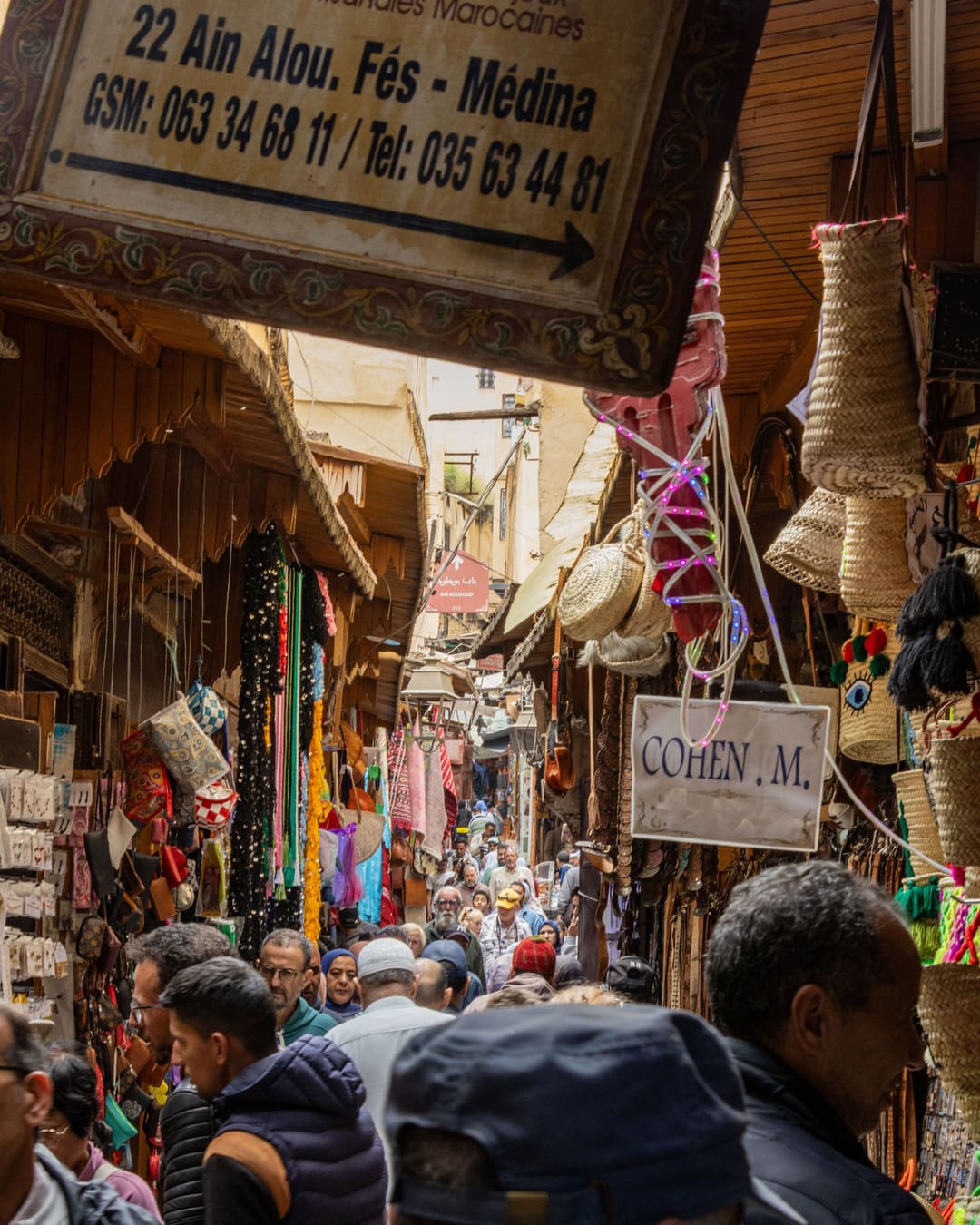
2. Medersas and the Quaraouiyine: Marinid masterpieces
Fes has Morocco's finest medersas (Koranic colleges), built in the 14th century under the Marinid dynasty. The Bou Inania Medersa, near Bab Bou Jeloud, and the Al-Attarine Medersa, in the heart of the souks, dazzle with marble courtyards, zellige tilework, carved stucco and sculpted cedar wood. They are among the few religious buildings in the city open to non-Muslim visitors. Close by stands the Al Quaraouiyine mosque-university, founded in 859 by Fatima al-Fihri and often described as the oldest university still operating in the world. The prayer hall is reserved for worshippers, but you can glimpse the courtyard through some of the doors. Its restored library is one of the treasures of Moroccan heritage. Cover shoulders and knees and avoid prayer times when visiting.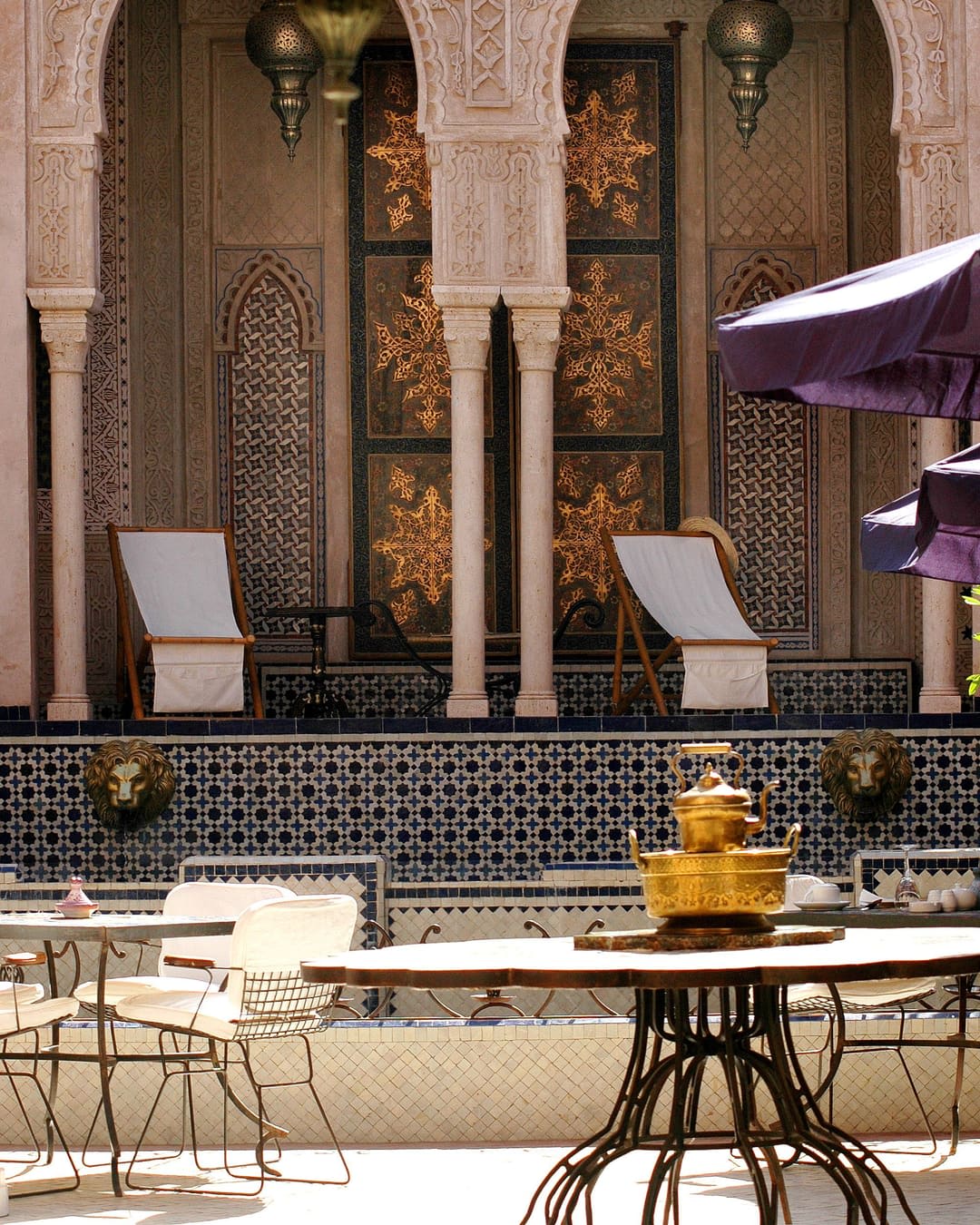
3. The Chouara tanneries and the craft quarters
The iconic image of Fes, the Chouara tanneries still work with methods barely changed since the Middle Ages: hides soak in stone vats of natural dyes while visitors watch from the terraces of the surrounding leather shops. You will be handed a sprig of mint for the smell; the best light is mid-morning, when the vats are in full swing. Fes is above all a city of craftsmen. The coppersmiths' souk on Seffarine square rings with hammering, the dyers' quarter colours the alleys, and the Nejjarine fountain marks the carpenters' district, home to a museum of wooden arts. Blue Fes pottery, zellige, embroidery and leather are the signature buys. Take time to compare, bargain with a smile and ask to see the workshops.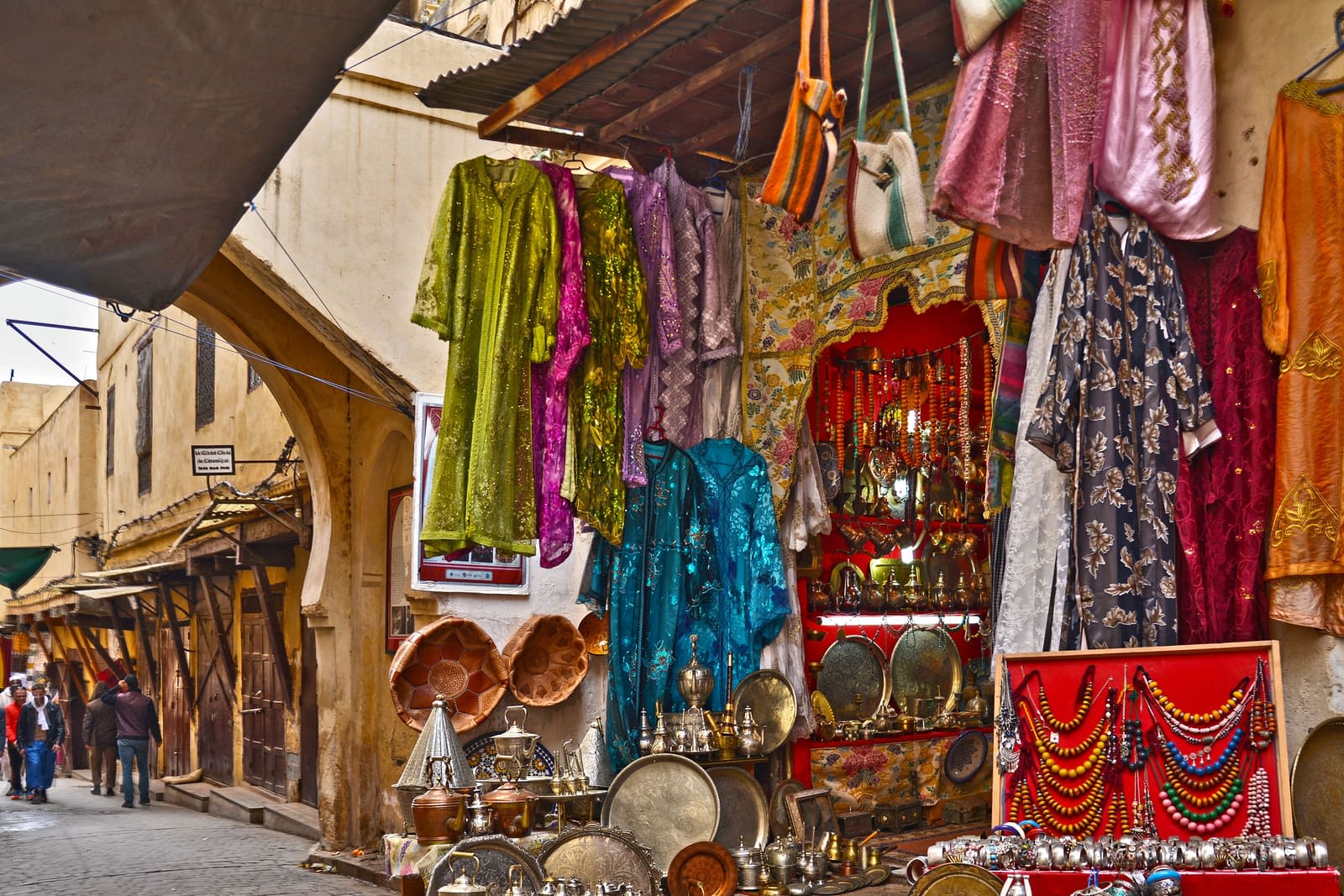
4. Fes el-Jdid, the Mellah and the Royal Palace
Founded by the Marinids in the 13th century, Fes el-Jdid ("New Fes") is airier than the old medina. Its most photographed sight is the façade of the Dar el-Makhzen Royal Palace, with huge chiselled brass doors framed by zellige; the palace itself is closed to visitors, but the esplanade alone is impressive. Next door lies the Mellah, the former Jewish quarter, easy to spot thanks to its houses with balconies open onto the street. You can visit the restored Ibn Danan synagogue and the large Jewish cemetery with its whitewashed tombs. The Jnan Sbil gardens, between Fes el-Jdid and the medina, offer a green break with ponds and palm-lined paths.5. Viewpoints, gardens and museums
To understand the layout of Fes, head up in the late afternoon to the Marinid Tombs or the Borj Nord, a 16th-century Saadian fortress. The view takes in the entire medina, its minarets and white rooftops, and the call to prayer at sunset is unforgettable. To the south, the Borj Sud offers another, quieter viewpoint. Heritage lovers will enjoy the Batha Museum, set in a 19th-century palace with an Andalusian garden and devoted to the arts and traditions of Fes, as well as the Nejjarine museum of woodcraft. Several palaces and former notables' houses, restored as guesthouses or restaurants, can also be discovered over a glass of mint tea.6. Day trips: Meknes, Volubilis and the Middle Atlas
About an hour's drive away, Meknes, another imperial city, impresses with the monumental Bab Mansour gate, El Hedim square and the granaries of Moulay Ismail. It pairs naturally with Volubilis, Morocco's best-preserved Roman site, famous for its mosaics, triumphal arch and basilica, and with the holy town of Moulay Idriss Zerhoun, clinging to its hillside. To the south, the Middle Atlas is a complete change of scenery: Ifrane, nicknamed "little Switzerland" for its pitched roofs and parks, and the Azrou cedar forest, home to Barbary macaques, make an easy day out. To the north, Chefchaouen and the Rif mountains are about four hours away. To plan these stops, browse our excursions or ask for a tailor-made itinerary.7. Where to stay and eat: riads and Fassi cuisine
Sleeping in a medina riad is the quintessential Fes experience: behind a discreet door opens a tiled patio, often with a fountain and a rooftop terrace. Choose one close to a gate (Bab Bou Jeloud, Bab Guissa, Bab Ftouh) to make arriving with luggage easier; staff often meet guests at the car park. Hotels in the new town are more conventional and suit travellers with a car. Fes is known as one of Morocco's great food capitals. Pastilla, a sweet-and-savoury pie, is an institution here; you should also try harira soup, tagines with preserved lemon, rfissa and pastries with honey and almonds. In the medina, small eateries serve simple, tasty dishes, while restored palaces offer more elaborate dinners in spectacular settings.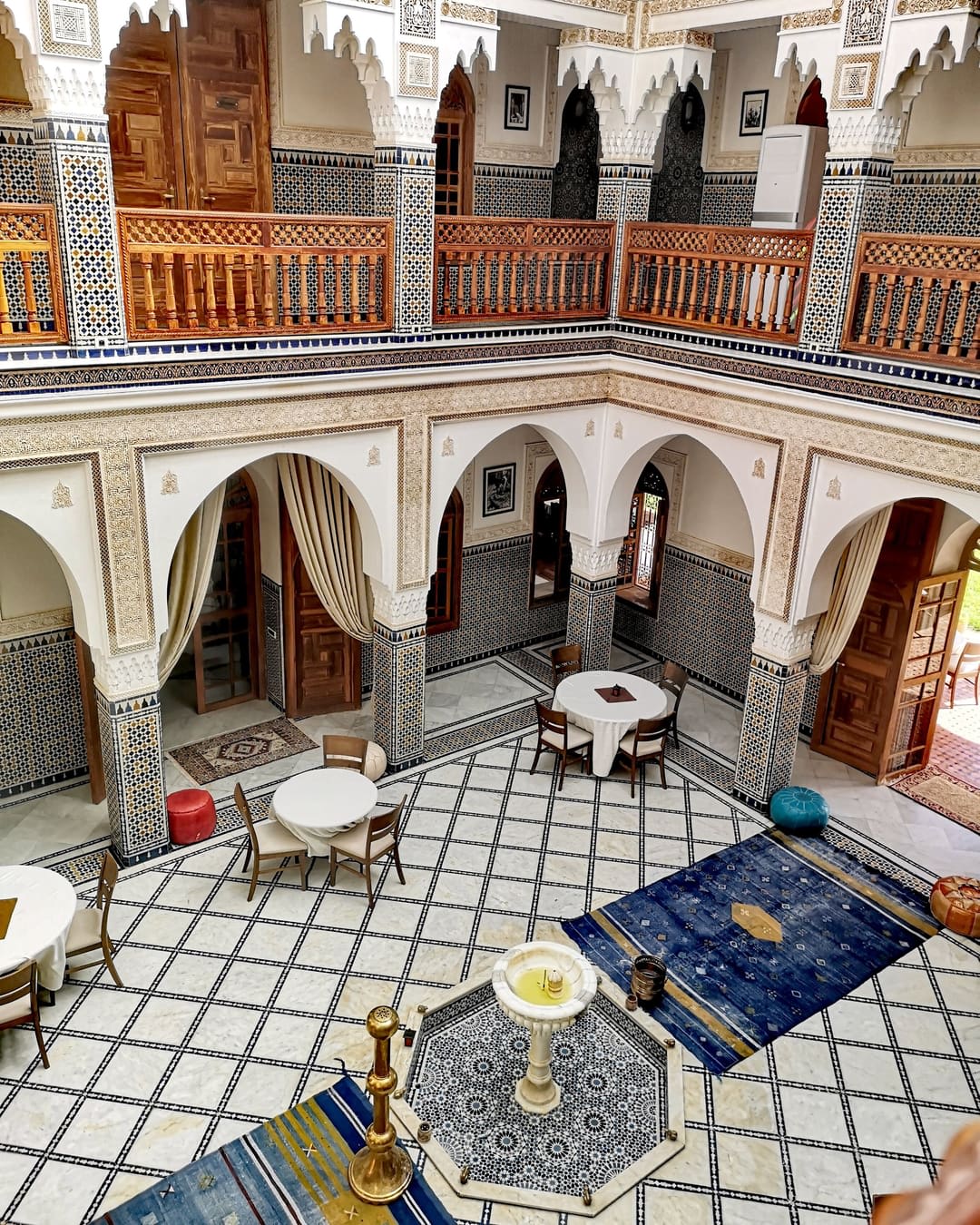
8. When to go to Fes
Fes has a continental climate: summers are hot and dry, winters cool, with nights sometimes close to freezing. Spring and autumn are the most pleasant seasons for walking the medina.
| Period | What to expect | Verdict |
|---|---|---|
| March – May | Mild temperatures, gardens in bloom, sacred music festival in late spring | Ideal |
| June – August | Strong afternoon heat, sightseeing early morning and evening | Fine with the right pace |
| September – November | Heat eases, lovely light, fewer visitors than in spring | Ideal |
| December – February | Cool sunny days, cold nights, possible rain | Good, with a heated riad |
9. How to get to Fes
- By train: from Tangier, allow about 3.5 to 4 hours, often taking the Al Boraq high-speed train to Kenitra and changing there; Rabat is about 2.5 hours away and Casablanca about 3.5 hours.
- By air: Fes-Saïss airport, about 20 minutes from the centre, has direct flights from several European cities.
- By car: about 4 hours from Tangier on the motorway, about 4 hours from Chefchaouen via the Rif road, about 1 hour from Meknes.
- Getting around: the medina is explored on foot; small red taxis link the medina gates, Fes el-Jdid and the new town.
10. How many days do you need?
| Length | Suggested plan |
|---|---|
| 1 day | Morning: Bab Bou Jeloud, Bou Inania Medersa, Talaa Kebira, the Quaraouiyine and Al-Attarine. Afternoon: Chouara tanneries, Seffarine square, sunset at the Marinid Tombs. |
| 2 days | Add Fes el-Jdid, the Royal Palace, the Mellah, Jnan Sbil and the Batha Museum, with dinner in a restored palace. |
| 3 days | Spend a day in Meknes, Volubilis and Moulay Idriss, or head into the Middle Atlas to Ifrane and the Azrou cedar forest. |
Go further with Nordvity
- Tour Tanger → Chefchaouen → Fès, 3 jours de la ville bleue à la médina impériale : a guided circuit that includes Fes
- Plan my custom trip : tell us your dates and wishes and we build the itinerary and stops
- Excursions and outdoor activities : what you can already book online from northern Morocco
Fes: frequently asked questions
How many days do you need in Fes?
Two days let you discover the medina and Fes el-Jdid without rushing. Allow three days to add Meknes and Volubilis or the Middle Atlas.
Do you need a guide for the Fes medina?
It is not compulsory, but an official guide is very useful on a first visit: the medina is huge and a guide opens workshop doors. Avoid unofficial guides who approach you in the street.
How do you get from Tangier to Fes?
By train, allow about 3.5 to 4 hours with a change in Kenitra to use the high-speed line. By car, the motorway also takes about 4 hours.
Can you combine Fes and Chefchaouen?
Yes, it is a classic pairing: about 4 hours by road separate the two cities. Plan at least one night in Chefchaouen to enjoy the blue town when it is quiet.
Can non-Muslims enter the mosques in Fes?
No, active mosques, including the Quaraouiyine, are reserved for worshippers. The Bou Inania and Al-Attarine medersas, however, are open to visitors.
What is the best season to visit Fes?
Spring and autumn offer the most pleasant temperatures. Summer afternoons are very hot and winter is cool, especially at night.
Keep exploring
Agadir · Béni Mellal · Casablanca · Dakhla · Essaouira · Fès · Marrakech · Ouarzazate · Rabat