Casablanca doesn't have a postcard reputation, and that is exactly what makes it interesting. Morocco's economic capital, a world city and the country's largest conurbation, it is a laboratory of modernity: skyscrapers, trendy cafés, art galleries, Art Deco heritage from the 1920s and 30s, and an immense mosque set on the ocean. Many arrive for practical reasons — its airport is the gateway for countless travellers — and end up staying longer than planned.
This guide shows how to discover Casablanca without getting lost in the metropolis: the must-sees, the neighbourhoods to explore on foot, the tables not to miss, and how to combine it with Rabat, Marrakech or northern Morocco.
At a glance: Morocco's economic capital, Hassan II Mosque (minaret about 200 m), Art Deco heritage, Ain Diab corniche, Mohammed V airport (international hub), Al Boraq high-speed train to Tangier in about 2 hours 10.
1. The Hassan II Mosque: the icon on the ocean
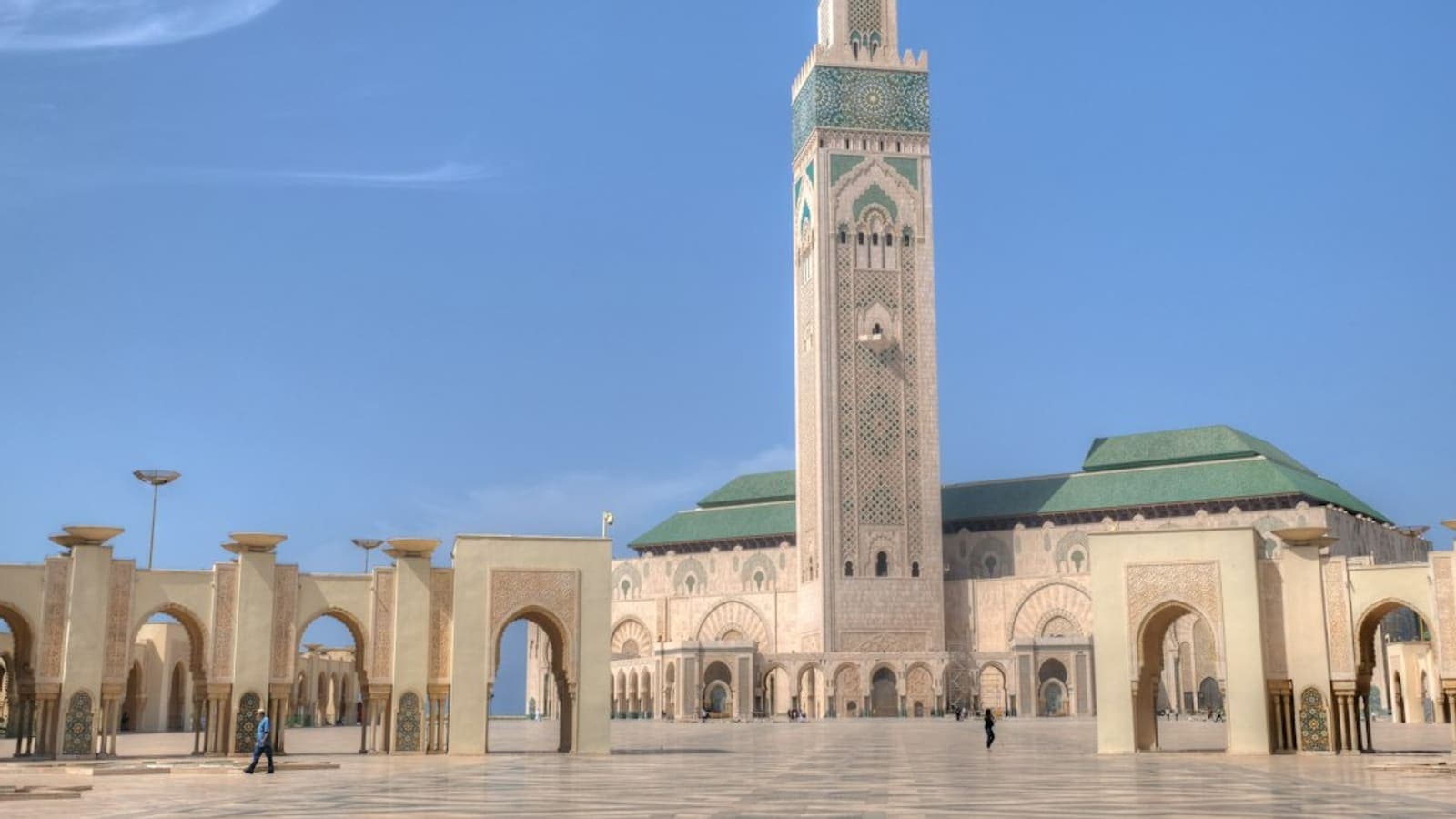
Inaugurated in 1993, the Hassan II Mosque is one of the world's largest and one of the few that non-Muslims can enter. Its minaret, rising to around 200 metres, is among the tallest in the world, and the prayer hall, partly built over water, can hold tens of thousands. The guided tour reveals carved cedar ceilings, zellige tilework, marble, the hammam and the ablution hall downstairs. Book the tour in advance in high season, and dress modestly. The best time for photos is late afternoon from the corniche or forecourt, when the light warms the facade.2. Art Deco heritage: Casablanca for architecture lovers
Casablanca has one of Africa's richest ensembles of Art Deco and Neo-Moorish buildings. The centre, around Boulevard Mohammed V, Place des Nations Unies and Avenue des FAR, lines up sculpted facades, cinemas, apartment blocks and townhouses from the 1920s and 30s. Themed walking tours run by local associations help you read these facades and understand the city's story. The Habous quarter, built in the 1920s to house Moroccan families in a Neo-Moroccan style, is another landmark: arcades, craft shops, pastry makers and bookshops cluster around the pasha's court.3. The old medina and the port
Casablanca's medina is more modest than those of Fes or Marrakech, but it keeps the mood of a lively neighbourhood, with daily shops, cafés and street vendors. The central market and fishing port are the best places to taste very fresh fish and seafood grilled on the spot. History fans can stop at the Sqala, an 18th-century bastion turned into a garden restaurant.4. The Ain Diab corniche: sea, beaches and nightlife
North-west of the centre, the Ain Diab corniche gathers beaches, clubs, restaurants and seafront hotels. It is the city's seaside district, lively by day and night, where Casablancans come to walk, swim or dine facing the ocean. For families, beach clubs are a practical formula; for couples, terrace restaurants offer pleasant sunset views.5. Culture, galleries and nightlife
Casablanca is a creative city: contemporary art galleries in Maarif and the Roches Noires area, concert halls, a jazz festival, arthouse cinemas, café-bookshops. Rick's Café, opened in 2004 as a tribute to the film Casablanca, is the best-known address for a piano-jazz evening, even if the mood is more touristy than cinematic. Off the beaten track, rooftop bars and small music venues showcase the local scene.6. Food: Morocco's great table
Casablanca is probably where you eat the most variety in the country. Traditional Moroccan cooking (tagines, couscous, harira), seafood (calamari, sole, red mullet), French brasseries, Mediterranean tables, Asian restaurants and chef-led cuisine coexist. Morning markets, Moroccan pastries and neighbourhood cafés are easy ways to taste the country informally. Book popular tables, especially at weekends.7. Casablanca as the pivot of a Morocco circuit
Thanks to its international airport, trains and motorways, Casablanca is one of the best starting or ending points for a circuit. The train reaches Rabat in about an hour, Marrakech in under three hours, and the Al Boraq high-speed line gets you to Tangier in about 2 hours 10. A two-night stay at the start or end of the trip lets you acclimatise, rest and see the city's essentials.8. When to go to Casablanca
Casablanca has an oceanic climate: temperate summers, mild winters with occasional rain. The city can be visited year-round.
| Period | What to expect | Verdict |
|---|---|---|
| March – May | Mild temperatures, changeable sky, gardens in bloom | Ideal |
| June – August | Heat tempered by the ocean, lively corniche, possible humidity | Very good (seaside) |
| September – November | Golden light, pleasant temperatures, fewer visitors | Ideal |
| December – February | Mild, more frequent rain, a cultural and food city | Good for museums and restaurants |
9. How to get to Casablanca
- By air: Mohammed V international airport, the country's main hub, connects to Europe, Africa and the rest of the world; a rail link serves the city centre.
- By train: Rabat about 1 hour, Marrakech under 3 hours, Tangier about 2 hours 10 on Al Boraq.
- By road: motorways to Rabat, Marrakech, El Jadida and Tangier; avoid driving in town at rush hour.
- On site: tram, petit taxis, ride-hailing apps and hotel shuttles.
10. How many days do you need?
| Length | Suggested plan |
|---|---|
| 1 day | Morning: Hassan II Mosque. Midday: fish at the central market. Afternoon: Art Deco centre and medina. Evening: corniche. |
| 2 days | Add the Habous quarter, a contemporary art gallery and dinner at one of the fine-dining restaurants. |
| 3 days | Complete with a trip to Rabat, El Jadida or Azemmour, or a hop to Marrakech. |
Go further with Nordvity
- Plan my custom trip : tell us your dates and wishes and we build the itinerary and stops
- Excursions and outdoor activities : what you can already book online from northern Morocco
Casablanca: frequently asked questions
Is Casablanca worth visiting as a tourist?
Yes, notably for the Hassan II Mosque, Art Deco heritage, the corniche and the food. It is also an excellent springboard for the rest of Morocco.
Can you visit the Hassan II Mosque?
Yes, through guided tours open to non-Muslims at several times a day. Book in high season and wear modest clothing.
How many days do you need in Casablanca?
One day for the essentials, two days to enjoy neighbourhoods, restaurants and galleries at your pace.
Is Casablanca safe?
It is a big metropolis: usual precautions apply (belongings, licensed taxis, evenings in busy areas).
How do I get from Casablanca to Marrakech?
By train in under 3 hours, by car on the motorway in about 3 hours, or by private transfer.
Can I combine Casablanca and Tangier?
Yes, thanks to the Al Boraq high-speed train (about 2 hours 10). Many travellers start in Casablanca then head north.
Keep exploring
Agadir · Béni Mellal · Casablanca · Dakhla · Essaouira · Marrakech · Ouarzazate · Rabat