Marrakech is Morocco's most visited city and one of its most intense. Founded in the 11th century by the Almoravids, the "Red City" takes its name from the rammed-earth ramparts that glow orange at sunset. It offers everything a world-class destination should — monuments, markets, restaurants, boutique stays — plus a rare bonus: in under an hour you can trade the medina for the stony Agafay desert, and in about an hour and a half you are in the High Atlas, snow-capped for much of winter.
This guide is written for travellers arriving from abroad, or from northern Morocco, who want to avoid the two classic mistakes: spending every hour around Jemaa el-Fna and missing the rest, or cramming in so many excursions that you never enjoy the city. You will find what is genuinely worth your time, how to pace your days, when to go and how to get here.
At a glance: UNESCO-listed medina (1985), international airport close to the centre, Agafay desert about 45 minutes away, High Atlas valleys 1 to 1.5 hours, Essaouira about 2.5 hours. Best seasons: March–May and September–November.
1. The medina: the beating heart of the city
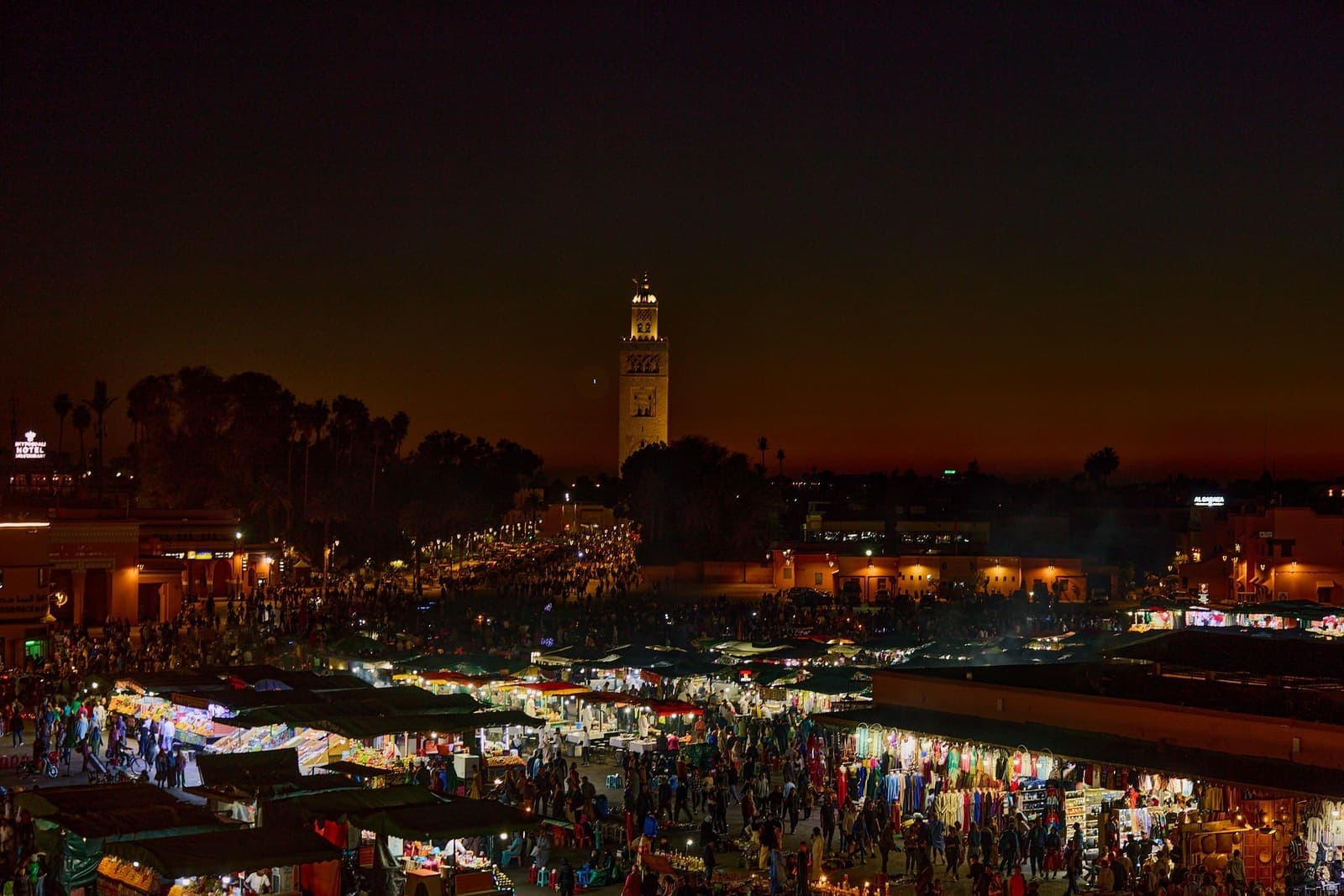
Marrakech's UNESCO-listed medina is best explored on foot, without too rigid a plan. Lanes narrow around the souks — spices, leather, hammered metal, slippers, lanterns. Getting a little lost is part of the experience, and you can always ask for the way to Jemaa el-Fna or the Koutoubia, whose minaret is visible from afar. Jemaa el-Fna changes character through the day. By morning it is calm, with orange-juice sellers and snake charmers; from late afternoon the food stalls roll in and the square becomes a vast open-air restaurant full of musicians, storytellers and charcoal smoke. For a view without the crowd, take a café terrace overlooking the square at sunset. A few heritage sites deserve your time: the Koutoubia Mosque (its 12th-century minaret is a landmark of Almohad architecture), the Bahia Palace with its painted ceilings and flowered courtyards, the Saadian Tombs and the Ben Youssef Madrasa, a former Quranic school of rare decorative finesse. Spend a morning on the medina and its monuments, when the air is cooler and the souks quieter.2. Gardens, museums and cool-down stops
Marrakech is also a city of gardens, which is a blessing when the heat rises. The Majorelle Garden, created by painter Jacques Majorelle and later rescued by Yves Saint Laurent and Pierre Bergé, is famous for its vivid blue, cacti and pools; go early to beat the queues. The Menara Gardens, with their great basin and pavilion facing the Atlas, are where locals stroll at the end of the day. Near Majorelle, the Yves Saint Laurent Museum and the Berber Museum tell the story of fashion and Amazigh culture. In the medina, the Marrakech Museum and the Maison de la Photographie add context. For a gentler pause, a traditional hammam remains one of the best ways to experience Morocco from the inside — just choose an established house.3. The Agafay desert: big landscapes close to town
It is often called "the Marrakech desert", but Agafay is really a vast plateau of rock and gravel dotted with ochre hills, offering a silence that is hard to imagine a few kilometres from the medina. It takes about 45 minutes to reach and works well as a half-day or evening trip: camel ride, short hike, sunset, dinner under canvas. It is the ideal choice if you are short on time and do not want to sleep far from the city. Thrill-seekers can book a guided quad or buggy outing on the open tracks; Agafay's wide, uncluttered pistes are less technical than the big dunes of the deep south. For families, the simplest format is a sunset camel ride followed by dinner and an evening return.4. The High Atlas: Ourika, Imlil and Berber villages
About an hour from Marrakech, the Ourika Valley is the city's green escape: river, waterfalls, terraced villages and local markets. The waterfalls at Setti Fatma, at the end of the valley, are reached by a path lined with small riverside restaurants — nicer on weekdays, when Marrakech families are not out in force. For a more alpine setting, the Imlil valley, at the foot of Toubkal (4,167 m, the highest peak in North Africa), takes about an hour and a half. It is the gateway to hikes of one or several days: Berber villages, walnut trees, mules with packs, mint tea at a local's home. Outside snow season the trail to the refuge needs no technical gear; in winter, check conditions and go with a guide. Further afield, the Ouzoud Falls (about 150 km, roughly 2.5 hours each way) drop around a hundred metres, with Barbary macaques in the trees. It is a long day but a memorable one, especially in spring when the flow is at its peak.5. Essaouira and the Atlantic coast
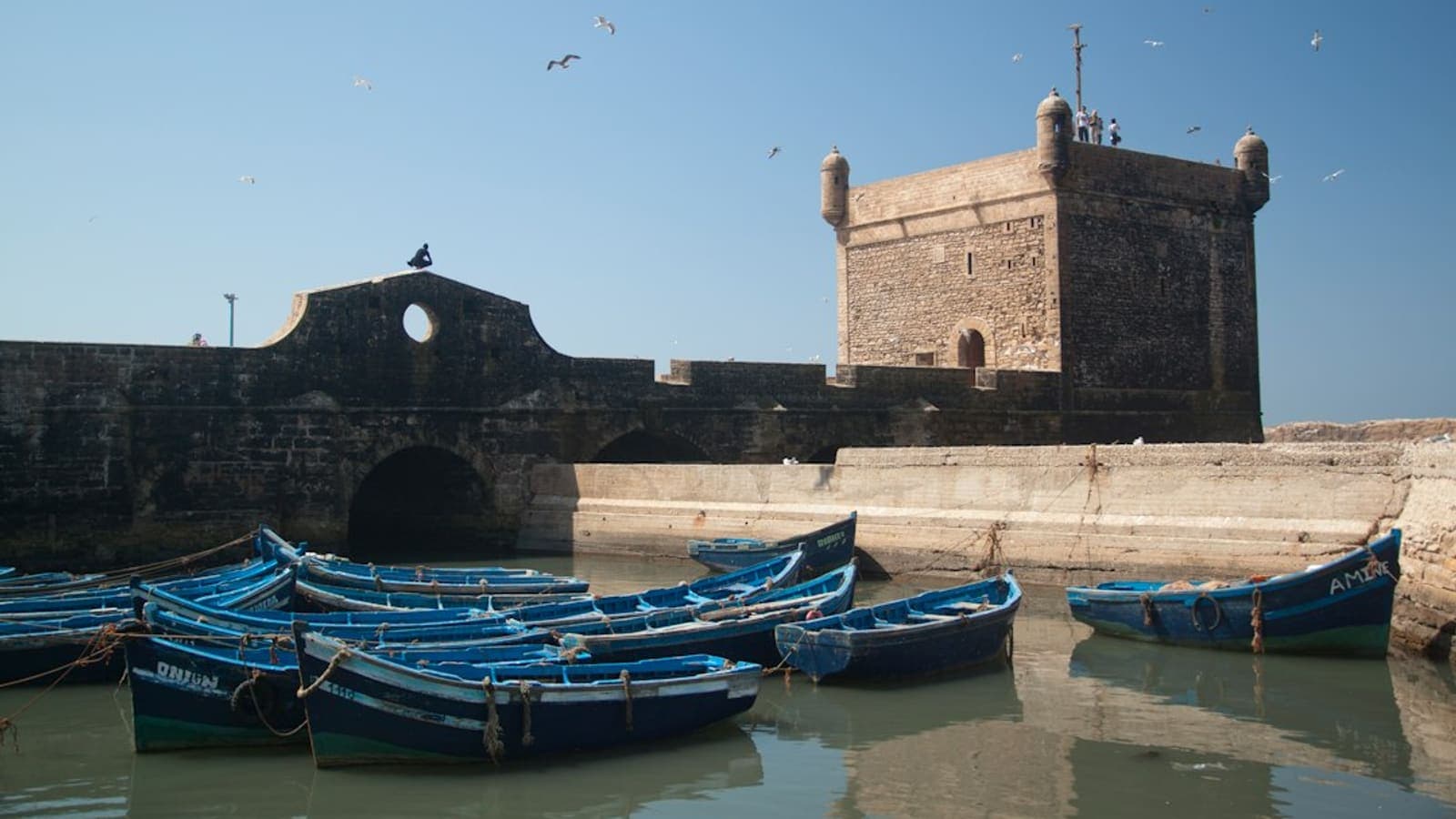
Marrakech lends itself to a breath of sea air in Essaouira, about 2.5 hours west. The fortified, UNESCO-listed medina, the fishing port and wind-swept ramparts have a completely different rhythm from Marrakech. See our dedicated guide if you would rather stay one or two nights than visit for a single day.6. Where to stay: medina, Gueliz or palmeraie?
Your neighbourhood shapes your stay. A riad in the medina is the most immersive choice — courtyard, fountain, rooftop breakfast — though it comes with night-time noise and lanes that can be awkward with luggage (most riads arrange pick-up). Gueliz and Hivernage suit those who prefer restaurants, shops and modern hotels with pools, a few minutes by taxi from the medina. The palmeraie and Ourika road have large hotels and quiet guesthouses, at the price of more frequent transfers. Our tip: for a first stay of three days or more, spend two nights in a medina riad and one further out, for example near Agafay, to feel the full variety of the region.7. Eating well without the pitfalls
Marrakech is a great food city. In medina cafés and on Jemaa el-Fna, try tagine, Friday couscous, pastilla (flaky, sweet-savoury), grilled skewers and harira, the traditional soup. To avoid disappointment: look for places where locals queue, make sure dishes are cooked in front of you, and confirm prices before you order. For the best of the contemporary scene, from modern Moroccan tables to international kitchens, book ahead in high season.8. Practical tips and good habits
- Bargaining: in the souks, the first price is an invitation to talk. Stay friendly and compare two or three stalls before buying.
- Unofficial guides: some people offer to "show you the way" through the lanes. Politely decline; for a guided visit, use a licensed guide.
- Dress: Marrakech is used to visitors, but covered shoulders and knees are appreciated in the medina.
- Transport: taxis should use the meter or an agreed fare; for excursions, a pre-arranged transfer is easier.
- Heat: from June to September, plan visits for early morning and late afternoon, and keep water with you.
9. When to go to Marrakech
Marrakech works year-round, but the feel differs widely: scorching in summer, chilly at night in winter, ideal in between.
| Period | What to expect | Verdict |
|---|---|---|
| March – May | Mild days, gardens in bloom, snow still visible on the Atlas | Ideal |
| June – August | Intense daytime heat, lively evenings, activities best done early | Avoid if you dislike heat |
| September – November | Pleasant temperatures, golden light, moderate crowds | Ideal |
| December – February | Mild days, cold nights, skiing and snow hikes in the Atlas | Very good, bring a jacket |
10. How to get to Marrakech
- By air: Marrakech-Menara international airport, close to the centre, has many direct flights from Europe and domestic connections from Casablanca and other cities.
- By train: from Casablanca the train to Marrakech takes about 3 hours; from Rabat, a little more. From Tangier, the Al Boraq high-speed line reaches Casablanca in about 2 hours 10 minutes, with a connection to Marrakech.
- By road: the motorway links Casablanca to Marrakech in about 3 hours; from northern Morocco allow a full day with stops.
- From the north (Tangier, Tetouan): this is the idea behind our northern circuits, which link Chefchaouen, Fes and Marrakech with a driver.
11. How many days do you need?
| Length | Suggested plan |
|---|---|
| 2 days | Day 1: medina, Jemaa el-Fna, Bahia, souks. Day 2: Majorelle, Menara, hammam, rooftop sunset. |
| 3 days | The two days above plus an Agafay day (quad or camel ride, dinner under canvas) or the Ourika valley. |
| 5 days | Three days in town plus Imlil or Ouzoud and a day in Essaouira, to mix culture, mountains and ocean. |
Go further with Nordvity
- Tour Tanger → Marrakech, 5 jours du détroit à la ville rouge : a guided circuit that includes Marrakech
- Plan my custom trip : tell us your dates and wishes and we build the itinerary and stops
- Excursions and outdoor activities : what you can already book online from northern Morocco
Marrakech: frequently asked questions
How many days do you need in Marrakech?
Two days cover the essentials of the medina and gardens. Three days leave room for a day trip (Agafay, Ourika). Allow five if you want mountains and Essaouira too.
When is the best time to visit Marrakech?
Spring (March–May) and autumn (September–November) have the most pleasant temperatures. Summer is very hot by day; winter is mild by day and cool at night.
Is the Agafay desert a sand desert?
No: it is a stony desert of rock and gravel, less than an hour from Marrakech. For big sand dunes you need to go to Merzouga or Zagora, which takes several days.
Can you go quad biking or buggy driving near Marrakech?
Yes, the Agafay tracks and the palmeraie suit it well, with a guide. See our quad and buggy pages for what is bookable online.
Is Marrakech safe for travellers?
Yes, it is a very well-visited destination. Usual precautions apply: watch your belongings in crowds, decline unofficial guides and check prices before ordering or buying.
Can I combine Marrakech with northern Morocco?
Yes. Many travellers link Tangier, Chefchaouen, Fes and Marrakech. Our circuits from the north organise the stops and transfers over several days.
Keep exploring
Agadir · Béni Mellal · Casablanca · Dakhla · Essaouira · Marrakech · Ouarzazate · Rabat